Stop losing money between the quote and the invoice.
LVOperator runs the whole job — estimate, signed proposal, dispatch, hours, parts, change orders, invoice — in one system that already knows what a card reader is. No spreadsheet. No whiteboard. No “we’ll sort it at the end”.
30 minutes · your jobs on the screen · no card
- 1
- System from first call to final invoice
- 3
- Ways to bill a job — T&M, draws or AIA
- 0
- Bars of signal required in a basement
- 77
- Dashboard metrics, or build your own
Your margin isn’t lost on site. It’s lost in the gaps.
Nobody loses money pulling cable. They lose it in the handoffs between the people who sold it, scheduled it, and did it.
The change nobody signed
The customer asked for four more readers. Your tech said yes. There is no paper, so there is no invoice.
→ Work done, never billedThe locked gate
The code was in the office, in an email, from eight months ago. Two hours of a two-man crew, and a customer who now has to reschedule.
→ A truck roll for nothingFriday afternoon timesheets
Hours rebuilt from memory, allocated to whichever job sounds right. Every job costing you run after that is fiction.
→ You never learn what a job really costsOne straight run, call to cash.
Each step hands the next one everything it already knows. Nothing is retyped, so nothing drifts.
- 01
The call
Logged as an opportunity with an owner and a follow-up date.
- 02
Estimate & proposal
Priced from your catalog, signed on their phone.
- 03
Work & invoice
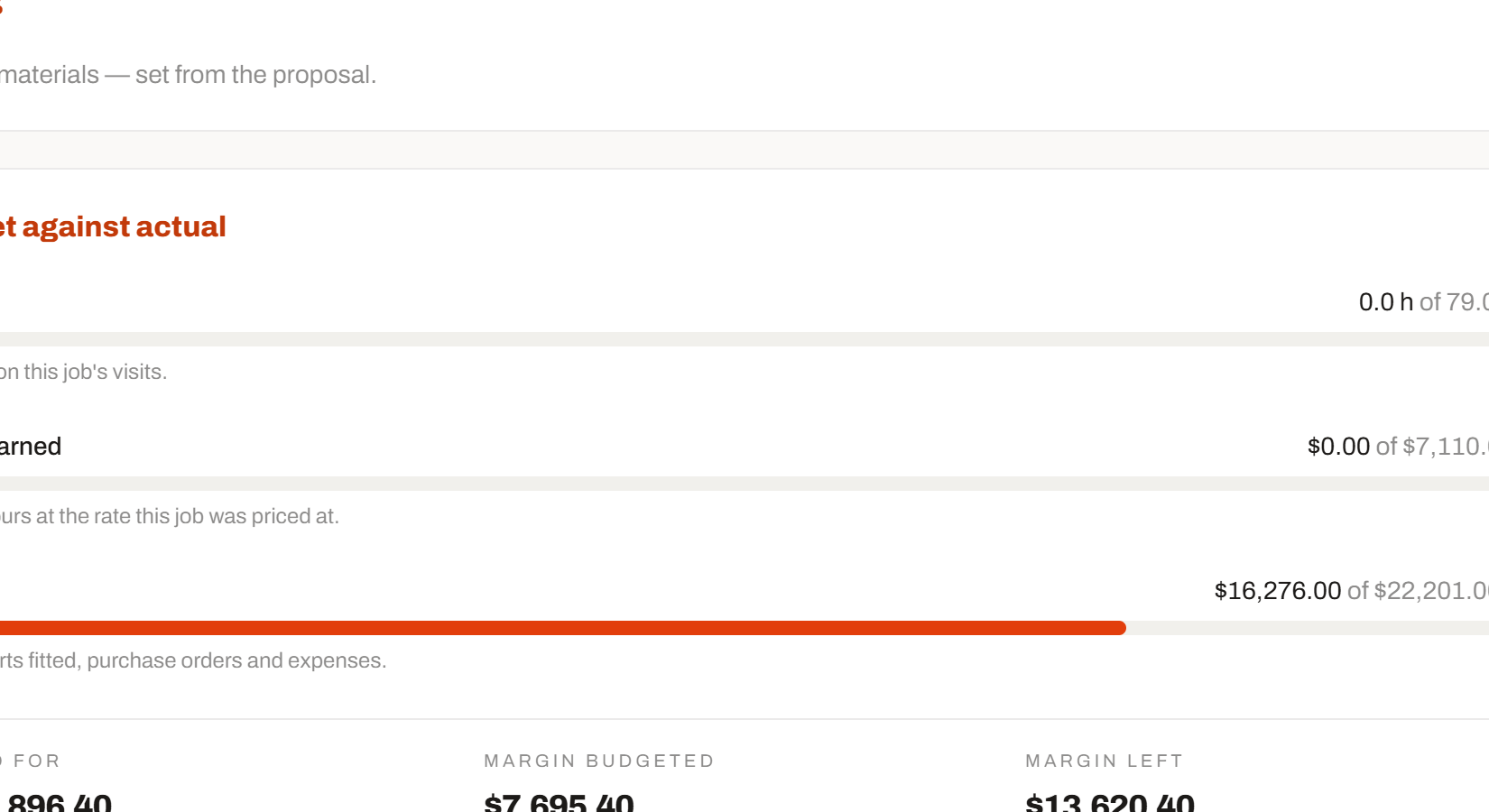
Hours, parts and photos captured on site — billed from what happened.
Built by industry veterans.
We’ve run the crews, priced the systems and chased the change orders ourselves. This isn’t generic field service software with a security skin on it.
Bill it the way it was sold
Time and materials, a draw schedule, or a full AIA G702/G703 application with retainage — chosen per project, not forced into one shape.
A deficiency that becomes a lead
A tech flags a failing panel on the job, and it's waiting in the CRM as a real opportunity before the truck leaves the curb — ready for a sales rep to quote.
Parts credited to the right person
Office can fit a part a technician forgot to log — it still lands on the van it actually came out of, not on nobody.
Your trade, out of the box
Access control, surveillance, intrusion, fire, network, AV, gates and structured cabling — configured before you log in.
Who this is wrong for.
We would rather tell you now than three weeks into an implementation. Built for low-voltage first, and it works just as well for other specialty trades — start on Starter and grow into it, whatever size you are today.
Read the honest version →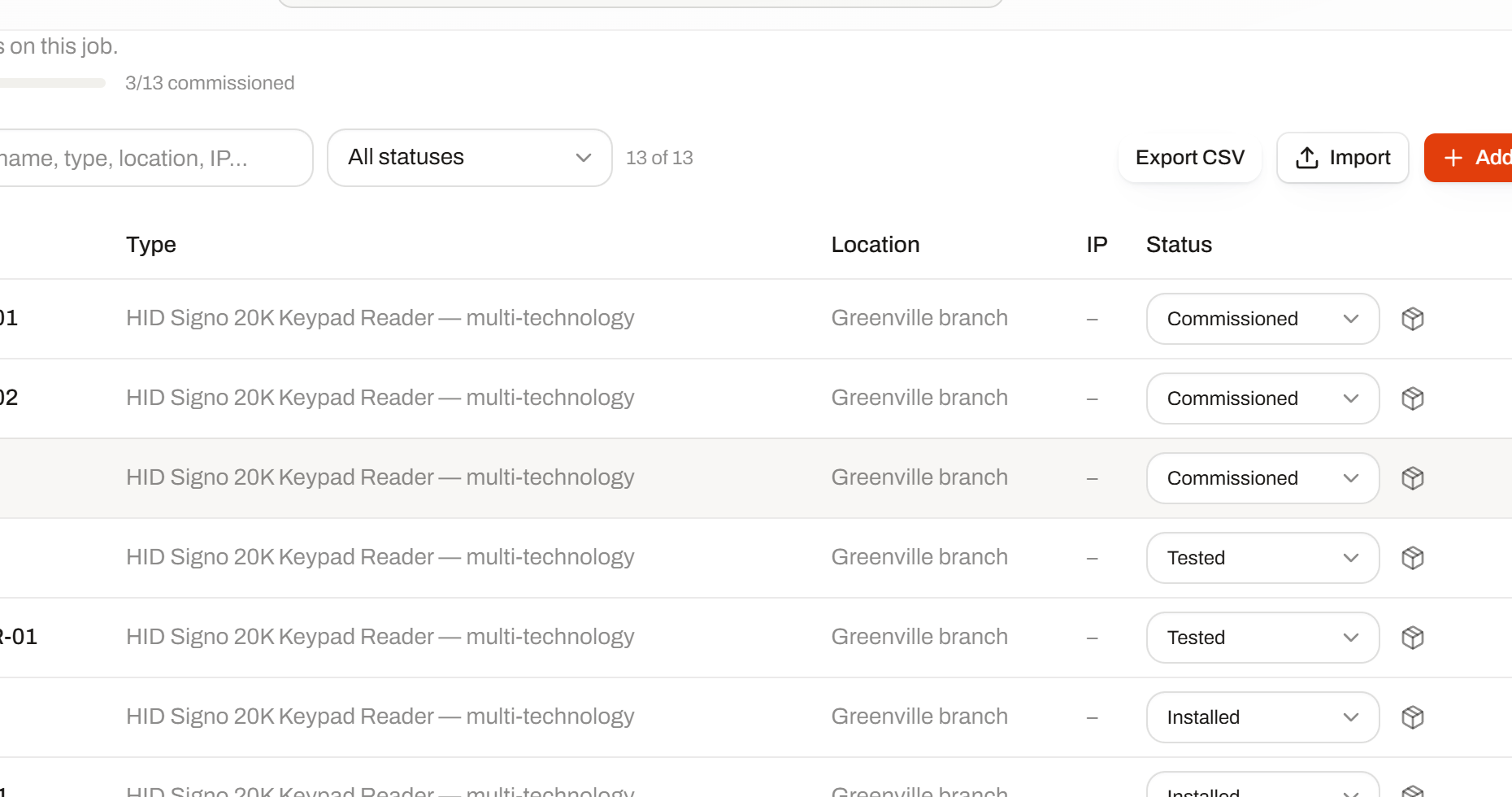
Thirty minutes, your jobs, an honest answer.
Bring one real quote — ideally one that went sideways. We price it live against your catalog, take it through to a signed proposal and out to a dispatched job, and tell you if it is a bad fit.